
Get Started!

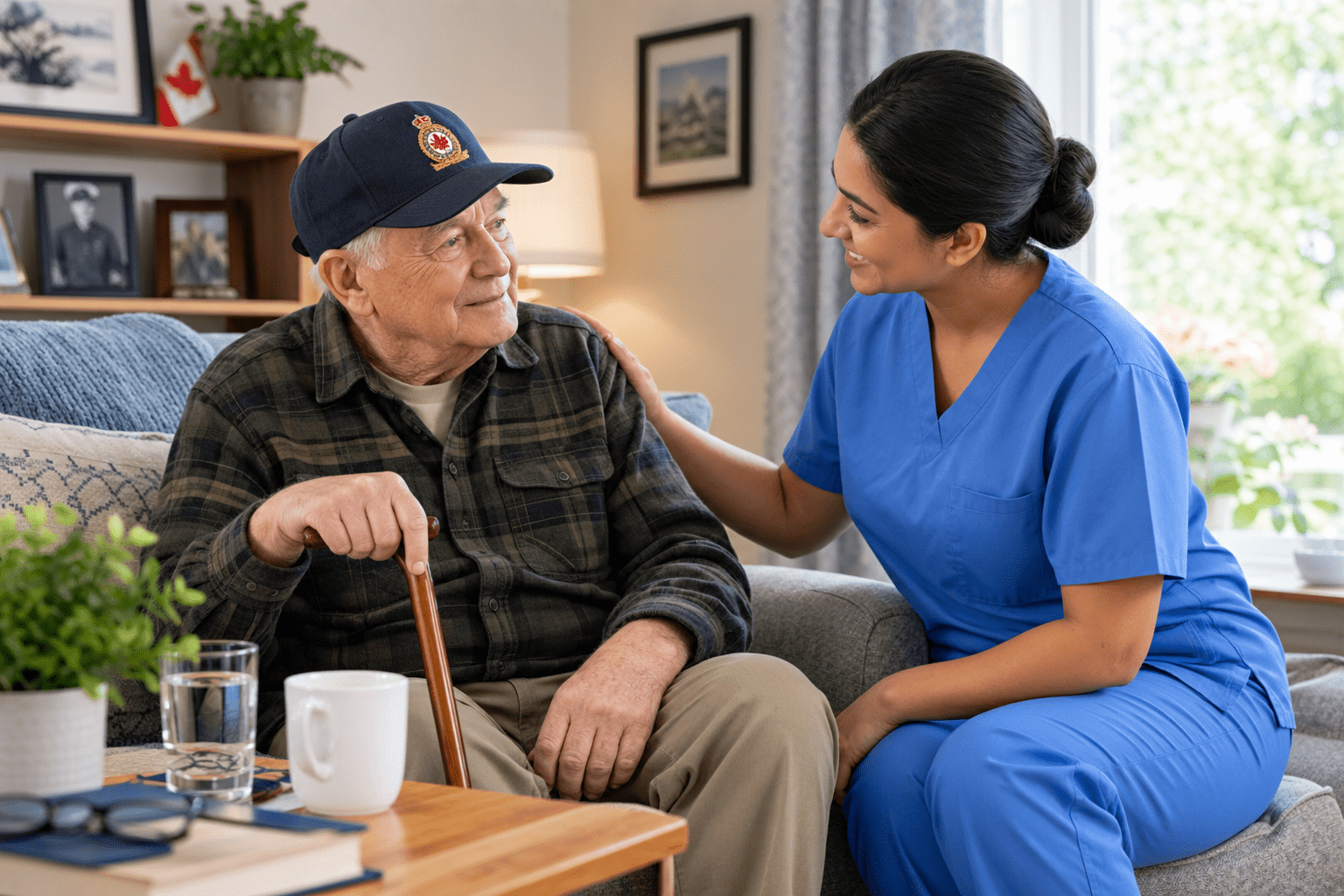
For many veterans, home represents more than merely a place to live; it is the place where they have developed routines, created memories, and gained a sense of independence. However, over time everyday activities do become more difficult due to changes in mobility, injuries, chronic conditions, the need for recovery, or simply because of the difficulty of looking after everything by themselves.
What families have to do is realise when some temporary assistance has turned into a real need for support; the warning signs are not always obvious and instead tend to show up as slight alterations in the veteran’s usual routine, becoming more apparent over time.
A shift in a veteran’s personal hygiene might be one of the earliest indications that he is having difficulties at home; you could observe that he is taking fewer showers, changing his clothes less often, or neglecting his grooming habits.
The problem isn’t always a lack of interest in looking after oneself; a veteran might have difficulty in getting safely into a bathtub, in standing for long times, in bending down, or in dealing with clothing due to pain or limited movement.
Once these tasks become consistently difficult, personal care services can provide assistance while still allowing the veteran to take part in their own daily routine.
Pay close attention to changes in mobility; for example, a veteran who previously moved around the house with ease may start to grasp furniture, avoid the stairs, move much more slowly, or hesitate when getting in and out of a chair.
Veterans may also find that they have given up the activities which they used to enjoy since getting about has become tiring or uncomfortable.
These changes may also affect other aspects of everyday life; for instance, reduced mobility can make it difficult to prepare meals, do laundry, shop, bathe, or reach the front door.
A further warning sign is that normal household duties start to accumulate. For example, a veteran may leave dishes in the sink, fail to finish the laundry, forget to take out the garbage, or allow clutter to build up around the house.
A veteran might still wish to take on these responsibilities but will no longer have the energy, strength, or mobility needed to carry them out safely.
When it comes to providing care for veterans at home, families can concentrate on the particular tasks that have become difficult rather than supposing that the veteran needs help with all aspects. The support can then be directed to the areas where actual assistance is required.
Food-related changes are easy to miss. For example, a veteran might start to skip meals, keep on eating the same simple foods, place heavy reliance on ready-made meals, or lose interest in cooking.
Cooking requires one to stand for long periods, lift pots, reach into cupboards, cut up the ingredients and then clean up afterwards. Even if a person is capable of preparing a simple meal, these various tasks together can result in exhaustion.
It would also be a good idea to talk to a healthcare professional if there is a sudden change in your eating habits, especially if this happens at the same time as other changes in your daily routine.
Veterans need to manage their medications and appointments in an organised and reliable way. Possible warning signs include regularly missing doses, feeling confused about when to take medications, forgetting appointments, or struggling to keep track of paperwork and instructions.
The fact that a veteran has missed one appointment doesn’t mean that they need continuous assistance; the issue arises only when such problems become a pattern or begin to affect their ability to look after their normal duties.
In different situations, the kind of support given by carers to veterans can include practical assistance with things such as reminders, scheduling, transportation, or other everyday routines.
Social withdrawal may also be a sign that a change has taken place; for example, a veteran who used to enjoy visiting friends, going to appointments, taking part in community activities, or spending time outdoors may now start to stay at home more frequently.
There could be a practical explanation for the change; transport might have become difficult, walking might now be uncomfortable, or the person might have lost the confidence needed to look after themselves independently.
Instead, families should consider why the withdrawal is occurring rather than seeing it as merely a matter of preference. There are situations in which offering practical help and providing regular company can assist a veteran in keeping up a more usual daily routine.
There is never just one clear problem, since a number of minor changes occur all at the same time.
The veteran could still look after their own dressing but might have trouble with bathing. They might be capable of preparing their breakfast but would no longer be able to handle grocery shopping. Although they can keep up with their medications, they have difficulty in cleaning the house.
Home health care for veterans and other kinds of home-based support could then come into the discussion, it being based on the individual’s needs and the kind of help required.
It is possible for the situation to become more stressful if one waits for a major incident before talking about support, since families need not wait until the veteran has had a serious fall, has missed several doses of medication, or has become unable to look after simple tasks.
Rather, look for patterns: has things become noticeably more difficult? Is the veteran avoiding activities since they are physically demanding? Are household tasks frequently left incomplete? Has their usual routine changed considerably?
These questions will enable families to decide if it is necessary to look into further support while the veteran is still able to take an active part in the decisions regarding their care.
For certain veterans, simply receiving help with everyday activities might be sufficient to make it easier for them to remain at home. In-home care services can provide support with daily routines while allowing veterans to maintain familiar surroundings and participate in their own decisions.
Families can consider home care services when these difficulties start to affect a veteran’s normal routine. They can arrange support only in the areas where the veteran needs help rather than taking charge of every part of the person’s day.
This is especially significant for veterans who place a high importance on their independence and who want to keep taking part in their own decisions.
The distinction between general home care and that which involves healthcare needs should be noted. A veteran who is managing a disability may require support that goes beyond basic household assistance. Disability management services may be worth exploring when ongoing support is needed to help the individual manage daily life at home.
People use the term home health care for veterans when qualified professionals provide support for health-related needs. The specific services that are available will vary according to the veteran’s situation and the care plan set up by the relevant healthcare providers.
Families ought therefore to refrain from thinking that all home-based services offer the same kind of care.
There are instances in which families think of moving veterans into assisted living arrangements when it becomes increasingly difficult for them to look after their daily lives. Families might consider this option when the help already available at home can no longer comfortably meet the person’s needs.
That does not mean that a person has to leave their home just because the difficulty is increasing; it is helpful first to carefully examine the problems the veteran is having and to consider whether extra support could deal with those particular difficulties.
The key issue is safety, as well as everyday functioning, preferences, and the amount of assistance the veteran really needs.
Canadian veterans and their families might come across the Veterans Independence Program when they are looking into support options. Those families who are considering this program should look at the present eligibility criteria and the benefits available according to the veteran’s particular situation.
Understanding the different programs can make it easier to have informed discussions about the assistance available and the support families can add to a veteran’s current care arrangements.
The specific kind of home support available to veterans will depend on the individual’s needs; they might require occasional help with everyday activities, more frequent assistance with their personal routines, or extra support during a phase of recovery.
It may be useful for families to draw up a simple list of the tasks which the veteran at present finds difficult, as this will show if the main problem is one of mobility, household duties, personal care, preparing meals, transportation, companionship or something else.
Rather than asking oneself, “Does my family member need a caregiver?”, it might be more useful to ask, “Which parts of the day are now difficult to manage safely?”
A major worry among families is that if a veteran accepts assistance it will make him feel less independent; in some cases, however, the aim is the opposite, since the proper kind of support can help a person carry on with the things they are still able to do comfortably.
For instance, a caregiver could help with a difficult household task while the veteran carried on with preparing their own breakfast, selecting their clothing, looking after their hobbies, or deciding how they wanted to spend their day.
In-home support for veterans ought to take the individual’s preferences into account. It is only when the veteran is regarded as an active participant that support proves most effective.
When members of the family are the first to intervene whenever a veteran starts to have problems, this arrangement often proves effective at the beginning. However, as time goes on it becomes hard to manage the responsibilities in light of work, family obligations, getting the veteran to and from places, and the caregiver’s own everyday life.
A family member who is providing care may eventually end up having to take charge of making appointments, doing the shopping, preparing meals, looking after the house, giving personal assistance, and arranging frequent visits. At this point, it might be worthwhile considering extra services for veterans who are living at home.
The fact that someone seeks help does not imply that the family have failed in their care for the person they love; it may only be that the veteran’s needs have become greater than what one family member can reasonably look after by themselves.
When you have made it clear what the family is concerned about, draw a simple chart showing how a veteran’s day is usually like.
Think about the times when help is most needed. Morning routines can become difficult when veterans need help getting dressed or taking a bath. In the afternoon, caregivers might help with meals, errands, or household tasks. In the evening, caregivers can assist with dinner and getting ready for bed.
Planning in this way makes aid given to veterans who remain at home more specific; rather than arranging vague or unnecessary help, families can concentrate on the times and activities which cause the greatest difficulty.
It can also simplify the process of setting out your expectations to relatives, caregivers, and healthcare professionals.
Check for steady changes in everyday activities, for example, having difficulty with bathing, dressing, eating, taking medication, mobility, housework, or keeping appointments. If several of these changes happen at the same time, then it may be a good idea to talk about needing extra help.
A veteran should consider in-home care when everyday tasks become difficult, tiring, or unsafe to manage alone. Caregivers can focus their support on the areas where the veteran needs it most.
The specific services will depend on the provider and on the individual’s requirements. They can centre on everyday activities, personal routines, duties around the home, offering companionship, or meeting other practical needs. Services relating to health are a distinct matter and may necessitate the involvement of qualified healthcare professionals.
The right kind of support can look after the tasks that have become difficult and at the same time enable the veteran to keep making their own choices and taking part in the activities they are able to manage.
The kind of help available to veterans who remain at home will vary according to the individual’s situation. Families can look into receiving aid with everyday routines, personal care, housework, companionship, or other practical requirements.
There is no situation in which the need for help appears all at once; instead, it usually comes about through a series of small changes in a veteran’s daily routine. Problems with bathing, cooking meals, looking after the house, walking safely, arranging appointments, or remaining socially active may all serve as important signs worth noticing.
If families spot the changes early, they will have more time to understand what is happening and discuss the options with the veteran. Providing home care for veterans is one way to give practical help while allowing veterans to maintain familiar routines and personal choices.
Above all, support must take into account the real needs of the veteran. If the suitable solution is one of occasional help, continuous in-home support for veterans, care that is related to their health, or looking into other options, the fundamental principle remains the same: you have to listen to the veteran, understand the problems they face, and then arrange the support around their daily life.

Each office is independently owned and operated and is an equal opportunity employer.
ComForCare strives to provide services accessible to everyone, please contact your local office for documents and details related to accessible Customer Service.
© 2026 ComForCare Franchise Systems, LLC.