ComForCare Home Care
Get Started!

Learn how a consent-first conversation can become an audio and written memoir with AI-assisted transcription, human editing and thoughtful privacy choices.

What does a completed visit tell us?

A visit record might show that lunch was made, laundry folded and an appointment attended. These entries help families and agencies know that important work was done. But they cannot, on their own, tell us whether the person felt hurried, made a choice or was known as more than a list of needs.

Imagine two afternoons with the same tasks completed. In one, a companion chooses the menu, finishes the work and leaves. In the other, the person chooses a family recipe, explains where it came from and decides whether to cook together. Both afternoons meet practical needs. The second may also give the person more room to participate. This is an illustration, not a comparison of actual care visits or a promise of a particular outcome.

The story is a way of seeing the person

People carry histories of work, migration, friendships, faith, hobbies, disappointments and ordinary routines. Those histories can explain why a particular time of day matters, why someone dislikes being rushed or why setting the table feels like part of who they are. They can also change. Care should make space for what the person wants now, not hold them to an old version of themselves.

Listening well does not require a polished memoir. It can be as simple as remembering that a client prefers to choose the music, or that a father would rather hear about his granddaughter’s week than be asked to recall the year he retired. The measure is not the number of stories collected or the emotional depth of a disclosure. It is whether the person has the freedom to speak, remain quiet, choose and be heard.

A fuller way to review care

Families and care teams can ask four questions alongside the usual safety and task checks:

  1. Choice: What did the person decide for themselves today?
  2. Connection: Did the visit make space for conversation or companionable silence on their terms?
  3. Continuity: Did the team learn a relevant preference and carry it into the next visit with appropriate consent?
  4. Responsiveness: When the person’s wishes or needs changed, did the care plan change with them?

These questions are prompts for reflection, not a scoring system. A quiet visit can be excellent care. A person does not owe the team a revealing story to prove that care was meaningful. Equally, warm conversation cannot make up for missed safety needs, poor communication or uncompleted essential support.

A future worth working toward

Better tools may help families preserve voices and photographs, and help teams remember preferences across visits. They should serve the relationship rather than turn private lives into another data set. The strongest account of care would tell us both that the person was safe and that their wishes shaped the day.

Every home has a story. Some parts may become a family memoir; others will be shared only in a passing conversation. The task of good care is to make room for the person to decide which is which.

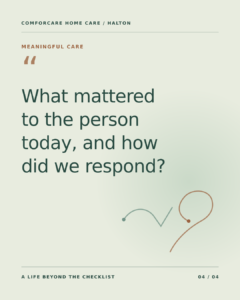
Gentle close: At the end of a visit, ask more than “What got done?” Ask, “What mattered to the person today, and how did we respond?”

Primary sources consulted (accessed September 23, 2026)

  1. Alzheimer Society of Canada — Finding suitable activities: reminiscence is optional, may evoke strong emotions, and should avoid testing recall.
  2. Alzheimer Society of Canada — National resource library: All about me and its conversation starter support a record of background and preferences.
  3. Alzheimer Society of Canada — Providing person-centred care: person-centred practice values the person and relationships.
  4. Descript — Audio to Text: transcription, speaker identification, correction and text export capabilities described by the provider.
  5. Otter Help — Export conversations: text and audio export; some export formats and settings depend on plan.
  6. Office of the Privacy Commissioner of Canada — Consent and Limiting use, disclosure and retention: meaningful consent, identified purposes and retention.
  7. Office of the Privacy Commissioner of Canada — Principles for privacy-protective generative AI: organizations using AI remain responsible for applicable privacy obligations.
  8. Information and Privacy Commissioner of Ontario — Consent and your personal health information: capacity and substitute decision-making guidance in the PHIPA context; applicability to a specific agency activity should be assessed.

Educational content for families and care teams; not individual medical or legal advice.

Find the Care
You Need!

Better In-Home Care Starts Here.

Services in Your Area

Helping Your Loved Ones Live Their Best Life Possible.

Bathing & Toileting

Companionship

Dementia Care

Family Respite

Grooming & Hygiene

Light Housekeeping

Meal Prep

Medication Reminders

Personal Care

Safety Supervision

Transportation

Testimonials From Our Verified Clients

Read how we are helping older adults live their best lives possible. Here is what clients say about their experience with our agency.
Listen360 logo
Rated 10 out of 10 by H.L.
What did you like about your experience with ComForCare?
Friendly professional caring psw's Prompt and reliable service.
March 27, 2026
Rated 10 out of 10 by M.T.
What did you like about your experience with ComForCare?
Extremely professional and helpful staff Maria is fantastic and Sandeep is one of the best care professionals that I have met. Thank you so much for all your help.
January 16, 2026
Rated 10 out of 10 by H.L.
What did you like about your experience with ComForCare?
Teresa was warm, helpful and an excellent companion for my 99 years old mom for the few hours we needed her to keep my mother company. We were completely confident that my mom would be well looked after.
December 30, 2025
Read More Reviews

Each office is independently owned and operated and is an equal opportunity employer.

ComForCare strives to provide services accessible to everyone, please contact your local office for documents and details related to accessible Customer Service.
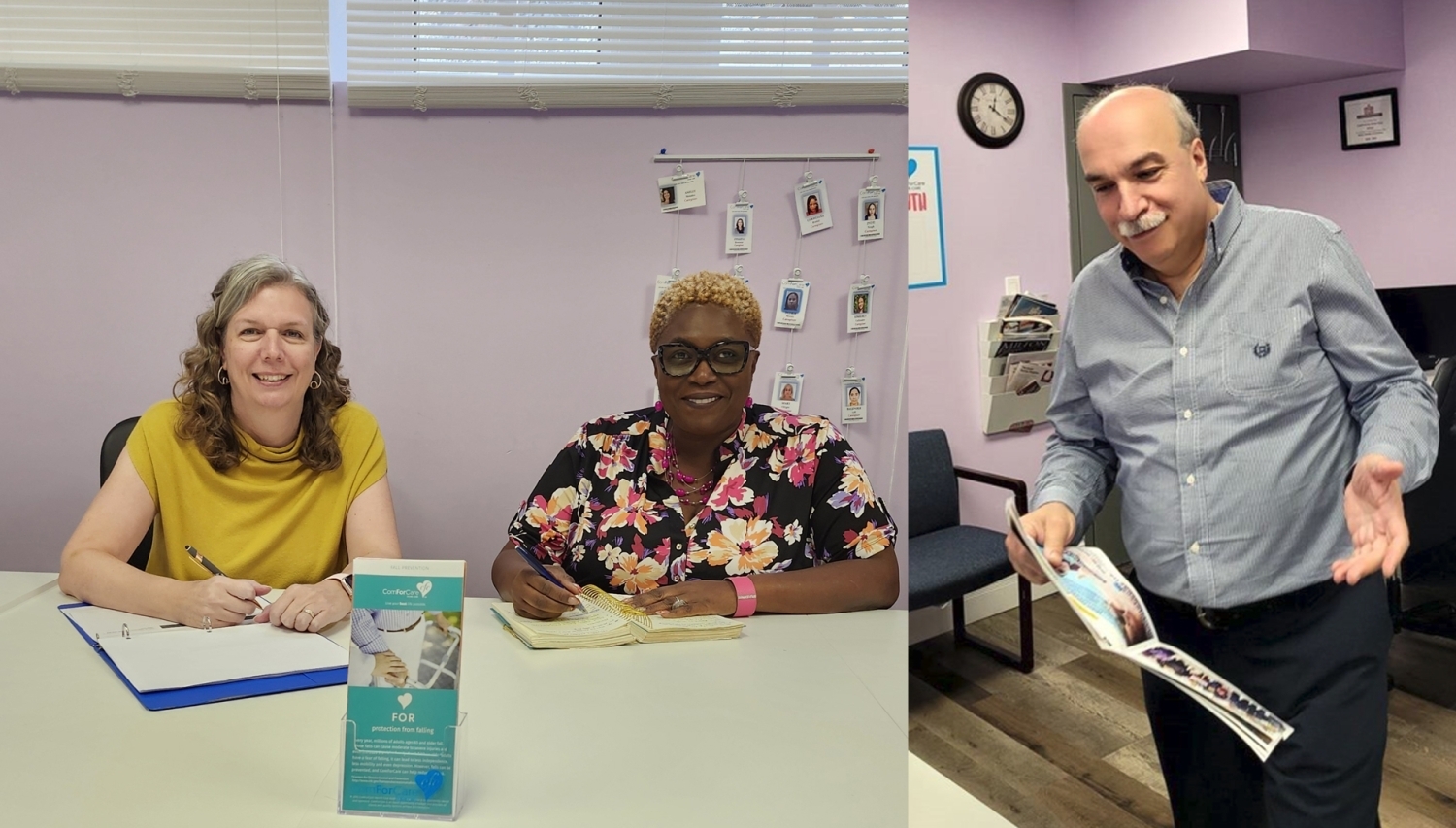
Office Team Photo
ComForCare Home Care Halton, ON
Operated By: 
Vardan Shahmuradyan and Milton Office Team
Office Phone:  
(289) 862-1122
License: THA-0000000856
14-75 Main Street East
Milton, ON L9T 1N4

© 2026 ComForCare Franchise Systems, LLC.

(click the 'x' to close this pop up)
Considering In-Home Care?

We have your
perfect caregiver.

For care, please fill out the form below.
For employment, please go to careers.
*Indicates Required Field

ComForCare is committed to protecting and respecting your privacy.

I agree to receive other communications from ComForCare.

For details on data handling, please visit our Franchisee Privacy Policy here. Message and data rates may apply. The frequency of messages varies. Reply HELP for assistance or STOP to unsubscribe.

or call (800) 886-4044.

Services vary by location. Please contact us to see what services are available in your area.