
Get Started!

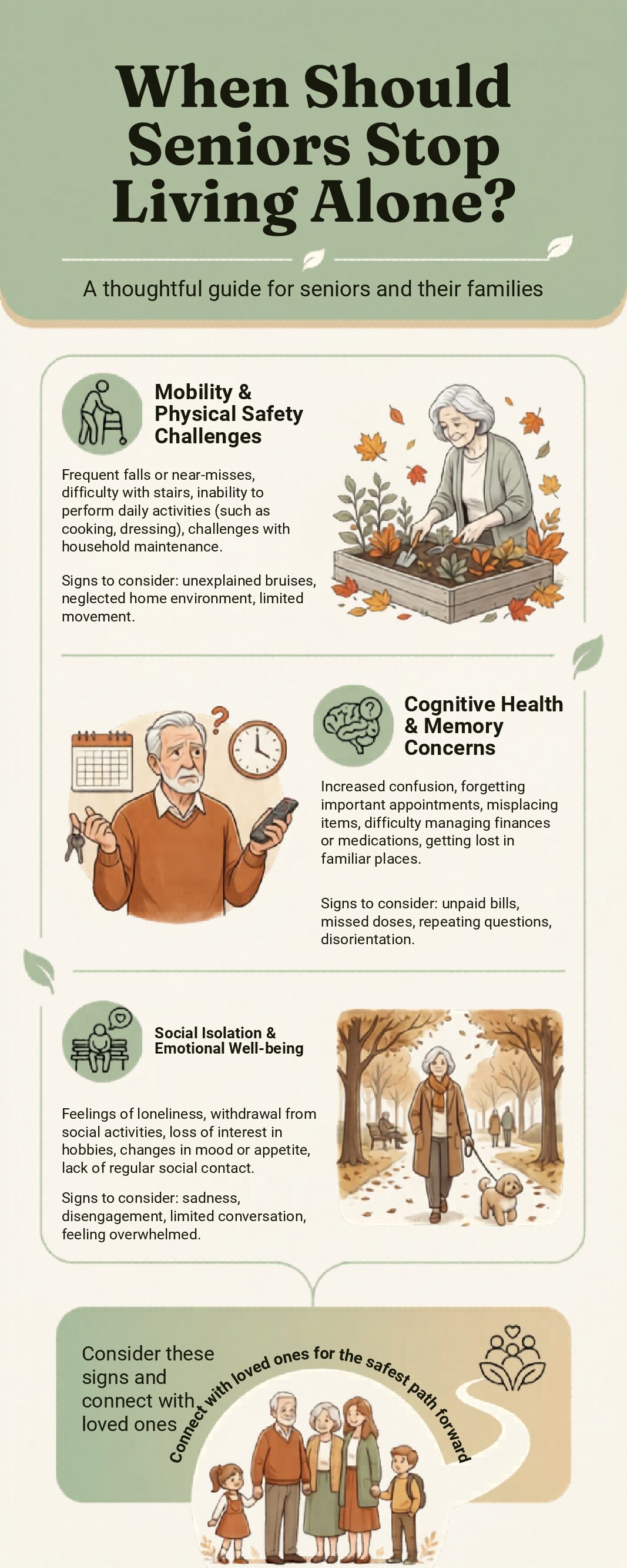
For many older adults, living independently is closely connected to dignity, comfort, and freedom. Remaining at home allows seniors to maintain familiar routines, stay connected to their community, and preserve a sense of control over their lives. However, there may come a point when living alone begins to create safety concerns or negatively affect overall well-being.
For families, recognizing when additional support is needed can be difficult and emotional. The decision does not always mean a loved one must leave their home. In many cases, professional home care services can provide the support needed for seniors to continue living safely and comfortably in familiar surroundings.
Here are some important signs that may indicate a senior should no longer be living completely alone without assistance.
One of the most common reasons families seek additional care is an increased risk of falls. Seniors who struggle with walking, balance, or transferring in and out of bed or chairs may face serious safety risks when alone.
Warning signs may include:
Even a minor fall can lead to hospitalization, loss of independence, or long recovery periods.
Occasional forgetfulness can be part of normal aging, but persistent memory issues may indicate more serious cognitive decline.
Families should pay attention to signs such as:
Seniors living with dementia or other memory-related conditions may become increasingly vulnerable when living alone without supervision.
Changes in eating habits are another common sign that a senior may need support at home.
Some older adults stop preparing meals due to:
Families may notice:
Poor nutrition can quickly affect energy levels, immunity, balance, and overall health.
Changes in hygiene are often gradual and may indicate physical or cognitive challenges.
Signs may include:
These changes can sometimes point to mobility limitations, depression, memory issues, or fear of falling in the bathroom.
Many seniors living alone experience increasing isolation over time. Limited social interaction can contribute to depression, anxiety, cognitive decline, and worsening physical health.
Warning signs may include:
Companionship and regular social interaction can play a major role in maintaining emotional well-being and quality of life.
Managing multiple medications safely can become challenging for seniors living alone.
Families may notice:
Medication errors can lead to serious health complications, especially for seniors with chronic conditions.
A senior’s home environment often reveals important clues about their ability to manage daily life independently.
Warning signs may include:
These changes may indicate declining physical or cognitive abilities.
Sometimes the issue is not whether a senior can technically live alone, but whether family caregivers can continue managing everything without support.
Family members may begin experiencing:
Seeking help early can improve quality of life for both seniors and their families.
Many families assume that once a loved one can no longer safely live alone, the only option is moving into a facility. In reality, professional home care services can often provide the support seniors need while allowing them to remain in the comfort of their own home.
Home care may include:
With the right support system in place, many seniors can continue aging in place safely and comfortably.
Talking to a parent or loved one about accepting help is rarely easy. Many seniors fear losing independence or becoming a burden to their families.
Approaching the conversation with empathy, patience, and respect can make a significant difference.
Helpful approaches include:
The goal is not to take control away from seniors, but to help them remain safe, healthy, and supported.
At ComForCare Home Care Halton, we understand how difficult these decisions can be for families. Our compassionate caregivers provide personalized home care services designed to help seniors maintain independence and improve quality of life in the comfort of their own homes.
Whether your loved one requires occasional companionship or more comprehensive daily support, our team is here to help families throughout Milton, Burlington, Oakville, Georgetown, and surrounding communities.
Contact ComForCare Home Care Halton to learn more about our personalized senior home care services.

Each office is independently owned and operated and is an equal opportunity employer.
ComForCare strives to provide services accessible to everyone, please contact your local office for documents and details related to accessible Customer Service.
© 2026 ComForCare Franchise Systems, LLC.