
Get Started!

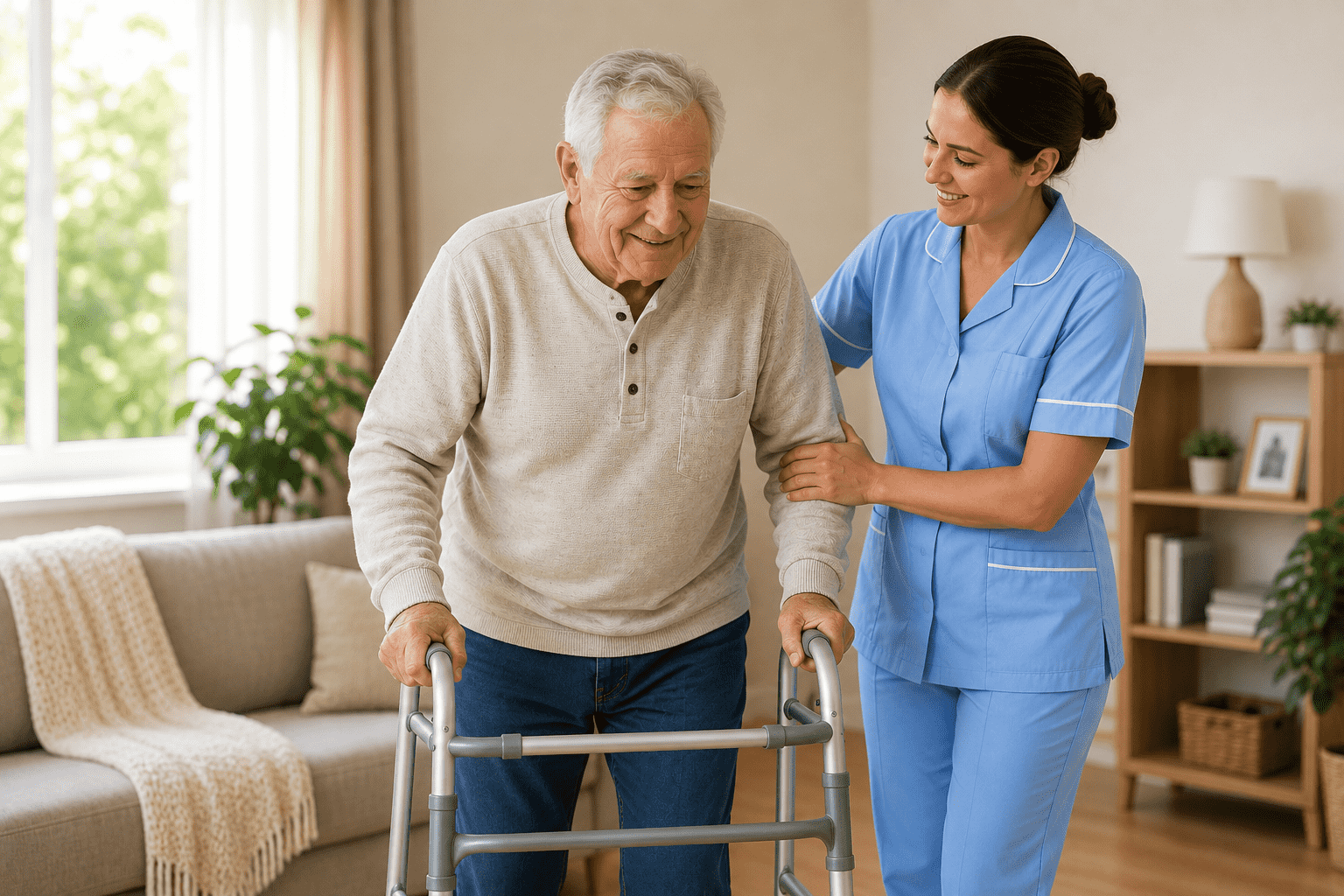
For older adults, a fall can alter their daily lives in just a few seconds. In addition to the risk of injury, a fall can affect their self-confidence, self-reliance, and comfort when moving around in their own home. The fear of falling can make some seniors less active and even cause them to avoid activities they once performed with ease.
Prevention is more than a matter of telling loved ones that they need to be careful if you are worried about them falling. The risk of falling may arise from various aspects of life, including the home environment and physical factors. If those risks can be identified early, it may be possible to take a more personal approach to safety.
This is why the Gaitway® Fall Prevention program was created by ComForCare. The fall prevention program for seniors is not a one-size-fits-all approach, but rather a systematic process for identifying potential fall risks and then implementing interventions for the person.
When considering home care Edmonton options for seniors, it is important for families to understand what a dedicated fall prevention program can offer. This can help them take steps to prevent unnecessary falls and reduce the risk of losing independence.
There is no one-to-one correspondence between risk and age among older adults.
One person could feel unsteady when entering and exiting their home, but once inside, the environment may be relatively safe and accessible. Another might walk with more confidence but have hazards around the house, such as loose carpet, slippery rugs, poor lighting, or other obstacles that increase the risk of falling.
The causes may differ, so to begin fall prevention, it is important to understand the person rather than apply universal solutions.
This concept is the foundation of ComForCare’s Gaitway® Fall Prevention program. The program examines issues that can increase a person’s fall risk and then uses that information to help identify appropriate interventions.
Fall prevention is not just about responding after someone has fallen. It is also about identifying existing risks and working to address them before they lead to an incident.
This proactive step can be a valuable part of an older adult’s efforts to stay independent and safe in daily life.
There needs to be a starting point for a structured fall prevention program. With Gaitway®, that process involves a fall-risk screening.
ComForCare says the program is based on a fall-risk screening tool obtained from the Centers for Disease Control and Prevention (CDC). The aim is to identify factors that might increase an older person’s risk of falling.
This is an important first step because fall risk can sometimes be hidden.
A senior may be able to perform daily activities on their own but may experience changes that could affect their safety. Families might notice that they are hesitant when walking, rely more on furniture for support, or are more cautious when walking in certain parts of the house.
Screening provides a more systematic way to identify concerns rather than relying solely on assumptions. The results can then help inform the next steps.
This is one of the main reasons why a structured fall prevention program differs from generic fall prevention advice. Gaitway® doesn’t start with a checklist of recommendations but rather reviews the person and the risks that might be relevant to them.
Assessing the person is not the only step in fall prevention. Assessing the environment where an older adult spends much of their time is also important.
The places seniors live, whether in their own home or a loved one’s home, may have hazards that are easily overlooked.
If mobility changes, it may suddenly become harder to maneuver around a rug that has been in the same hallway for years. Low lighting can make it more difficult to spot obstacles. Loose carpet or slippery surfaces may also increase risks.
ComForCare’s Gaitway® program includes a professional home safety evaluation.
The evaluation helps determine which environmental factors might contribute to falls. ComForCare highlights loose carpeting, slippery rugs, and poor lighting as potential concerns.
It is important to consider home safety as part of the overall prevention strategy because the home environment plays an important role in protecting seniors’ safety.
The purpose is not to completely change a senior’s home. Rather, the assessment helps identify specific areas where the environment might make daily movement less safe.
Each home has its own unique features. An individualized assessment can help determine which issues are relevant to each person’s home.
An in home care Edmonton assessment can also help families understand risks they may not have noticed during a normal visit.
If you can’t identify risks, how can you take action to address them?
After screening and assessment, the Gaitway® approach focuses on interventions based on the risks identified. This provides a more personalized approach to recommendations rather than a one-size-fits-all solution.
If environmental hazards are identified, for instance, attention can focus on improvements that can be made in that particular area of the house. If other factors contribute to fall risk, appropriate interventions may be considered as part of the overall care plan.
This tailored approach is a key element of the program.
It also helps families understand that preventing falls among older adults is unlikely to be achieved through a single change. Safety may require awareness of multiple small risk factors and efforts to address them.
Those risks may also change over time for some older adults.
A senior who can walk around without assistance now may experience difficulties with mobility, health, confidence, or daily living in the future. Thus, fall prevention is not a “one-and-done” intervention, but rather an ongoing approach to supporting safe aging.
Physical factors can also affect an elderly person’s ability to move safely through their daily lives. Confidence and mobility can be impacted by strength, stability, and balance.
This is why topics like balance training for seniors and fall prevention for seniors are often included in fall risk reduction.
Exercises should not be preselected from a “list of exercises” and applied to all older adults. Existing fall risks, mobility and health restrictions, and individual abilities must be taken into account.
ComForCare says the Gaitway® method integrates the skills of a practicing physical therapist with a specialization in fall-prevention exercise programs. The introduction of this professional perspective adds to the overall emphasis of the program on understanding and reducing fall risk.
The crucial thing to remember is that Gaitway® is not a physiotherapy exercise program. Rather, fall prevention should be considered part of a holistic, personalized strategy that may include working with the appropriate healthcare professional.
This offers families a more responsible approach to physical activity and fall prevention. It should not be a set of exercises that all seniors follow, but rather an approach tailored to the person’s abilities and needs.
The primary objective of any fall prevention program sounds simple: decrease the risk of falling.
However, for an older adult, the effects can be far-reaching.
A person can feel more at ease at home and in their everyday life. It can impact their comfort in maintaining their usual routines and their ability to remain independent in their daily lives.
This is especially true for families considering senior care Edmonton services, as safety and independence go hand in hand.
The objective is not to limit an older adult solely because of the risk of falling. Excessive restrictions can interfere with routines and independence.
Rather, a thoughtful fall prevention plan will determine the areas of risk and the ways in which that risk can be minimized while still accommodating the person’s strengths, preferences, and lifestyle.
The overall goal of Gaitway® is to help develop a better-informed fall prevention strategy before a fall occurs. It aims to identify fall risks and home safety issues, develop individualized interventions, provide education, and promote collaboration.
Effective fall prevention should not be a process that leaves the senior alone to address fall hazards.
Gaitway® includes caregiver education and emphasizes collaboration among the senior, caregiver, and healthcare provider. This enables the family and other individuals involved in the senior’s care to play a role in understanding the senior’s needs.
When considering in home care Edmonton or senior home care Edmonton, this team effort can help make fall prevention part of the daily care routine instead of something considered only after a fall.
Fall prevention for seniors shouldn’t become a burden on the way they live. The aim is to identify potentially avoidable risk factors and support older people in living as safely and independently as possible.
If you’re considering senior care Edmonton, Gaitway® provides a framework for this approach. The program emphasizes identifying risks, home safety awareness, personalized interventions, caregiver education, and collaboration to improve safety for aging at home.
With a proactive approach, families can address concerns before a fall forces them to rethink how their loved one is supported.
Fall prevention isn’t simply about preventing an injury for many older people. It’s also about living day by day with greater confidence while remaining in familiar surroundings.
A planned fall prevention program can help by identifying individual risk factors, fall hazards within the home, and areas where support is required. Care should focus on creating a safer environment rather than unnecessarily restricting everyday activities.
Fall prevention is part of a comprehensive care plan and can play a role in maintaining overall safety and responding to risks early, so that a fall does not adversely impact an older adult’s life or independence.
The risk of falling can change over time. Even if a senior has been functioning well on their own, new problems may emerge because of changes in mobility, balance, health, or the home environment.
If you’re considering in home care Edmonton, ongoing care can help your family member remain safe, comfortable, and independent.
Preventing falls in older adults requires a combination of risk screening, education about fall risks, individualized interventions, caregiver training, and collaboration. Considering these factors together provides a more comprehensive approach than relying on a single safety measure.
Not all falls necessarily signal a need for increased support with an older person’s safety.
A structured fall prevention program takes a proactive approach by looking at the person, their home environment, and their individual needs to help reduce the risk of falling.
If a senior wishes to remain in their home, a successful fall prevention program is not just about preventing a fall. It’s about providing a safer place where they don’t feel confined, can function independently, and can maintain their dignity.
By understanding the risks and taking proactive steps to address them, families can make more informed decisions about senior care and help their loved ones remain safer and better supported at home.
The goal is to identify and minimize fall risks to help an older person remain safer, more confident, and independent.
Fall-risk screening is an important first step because it can help identify specific concerns before deciding which fall-prevention strategies may be appropriate.
Fall prevention programs can help identify modifiable risk factors and provide information to support appropriate interventions. However, no program can prevent every fall.
The “5 P’s” can vary between different clinical environments. This program, however, emphasizes risk screening, home safety, tailored interventions, education, and collaboration.

Each office is independently owned and operated and is an equal opportunity employer.
ComForCare strives to provide services accessible to everyone, please contact your local office for documents and details related to accessible Customer Service.
© 2026 ComForCare Franchise Systems, LLC.