
Get Started!

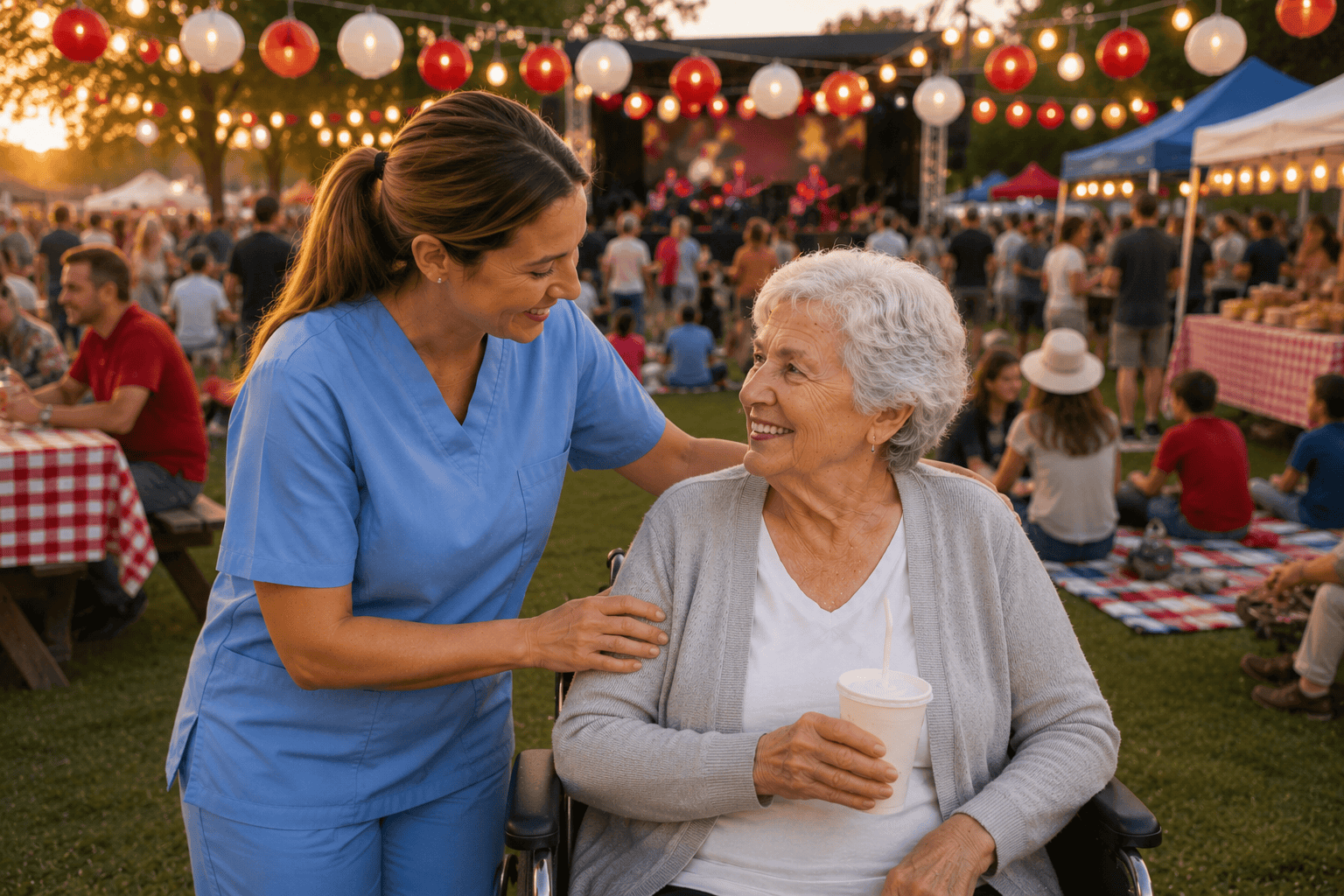
Canada Day is one of the most celebrated holidays in Canada. Parades take over streets, families sit for barbecues, parks enjoy music, and the sky is lit by fireworks in the evening. It is a day that focuses on togetherness, celebration, and community spirit.
However, for many older adults, holidays can be lonely instead of happy. Mobility limitations, health problems, lack of transportation, or loneliness in spirit make it harder for seniors who get elderly care at home to take part in the festivities. Some no longer have close family members, while others miss the traditions they once had with their loved ones.
Caregivers make an incredible impact in this area. They particularly need to work towards ensuring that older adults who may be isolated or disconnected from the celebrations have a sense of inclusion, belonging, and emotional support on Canada Day, whether they are professional caregivers, family members, or companions providing home help for seniors.
Integrating seniors into a society does not require expensive plans or grand events. Oftentimes, it is the simple things, the conversations, and the moments that are shared that leave the largest impact on oneself. This, coupled with a senior’s involvement in decision-making, can make a senior feel more alive.
Holidays bring up a lot of feelings in older adults. While celebrations bring excitement, they also remind the seniors of changes that they have undergone over the years.
Many seniors have to deal with decreased mobility, chronic health conditions, decreased independence, and distance from family members. Lack of spouse or death of friends, Limited social interaction
During holidays such as Canada Day, these feelings are exacerbated. Seniors may remember large family gatherings, travel traditions, or community events that they can no longer attend.
For seniors undergoing elderly care, their emotional well-being needs equal attention as their physical support. Social disconnection increases loneliness and worsens mental health problems.
That is why senior socialization has such a major role in healthy aging. Sharing experiences, having conversations, and establishing an emotional connection enable seniors to feel connected and valued in their surroundings.
The perception of inclusion is directly linked to a senior’s quality of life. This inclusion extends to celebrations, and involving seniors in such events can help in mitigating feelings of isolation.
Inclusion can be enhanced: Emotional wellness, Self-esteem, Cognitive stimulation, Communication skills, Confidence, Happiness.
In many cases, small moments and thoughtful gestures mean far more to seniors than large celebrations. A little talk, a meal together, or spending some time outside can have the same effect as a large gathering could.
Canada Day is a great opportunity for caregivers to provide such experiences.
Not every senior is comfortable going to crowded events. Fortunately, caregivers can make sure that there is a festive atmosphere at home.
Decorating living spaces with Canadian-themed items instantly makes the day feel special. Caregivers can use Canadian flags, red and white bunting, table centre pieces, balloons, seasonal flowers, and Canadian music
These small efforts can create excitement and incite the seniors to take part in the day’s celebration. Being in familiar surroundings often helps seniors who receive elderly care at home more than crowded public places.
Decorating can also be among the best Canada Day senior activities.
Caregivers can encourage seniors to: Put up Christmas decorations, make crafts by hand, paint little flags, make festive greeting cards, and give out family photographs of past celebrations.
Taking part in the elderly activities offered makes them feel that they are not just watching their movements but participating in it.
Creative activities can also encourage conversation and keep the mind active, more so for seniors who spend most of their time indoors.
Many older adults like to look back on their lives and tell personal anecdotes. Storytelling can be encouraged by caregivers during celebrations of Canada Day.
In providing companionship for seniors, caregivers can ask the following questions: What was your Canada Day celebration like when you were younger? What traditions did your family have? What are your favourite memories of past celebrations?
Such conversations make seniors feel heard, respected, and emotionally connected.
Storytelling also works in favour of family members and other caregivers by providing them with an understanding of the senior’s experiences, values, and personal history.
Every senior has different interests and comfort zones. Some seniors may prefer quiet activities, while others like interacting with people.
Caregivers involved in senior caregiver support should choose activities that relate to the personality, mobility, and energy of the senior.
Broadcasting of many national celebrations is done live on television. Watching concerts, ceremonies, or fireworks from home helps seniors enjoy the excitement without having to deal with crowds and worries about transportation.
Caregivers can make the experience enjoyable by: Packing snacks, Room decoration, Commenting on performances, Reminiscing during the broadcasts
Music holds a strong emotional attachment for several seniors. Songs that are familiar to the senior also provide comfort, nostalgia, and happiness.
For caregivers to play music for the older adults in dementia-friendly ways, they can create playlists with Classic Canadian songs, Patriotic songs, and Top songs from the seniors’ younger days
Music-based holiday activities for seniors can encourage relaxation, emotional bonding, conversation, and cognitive memory stimulation
Some seniors may even enjoy singing along or gently moving to the music.
In most holiday celebrations, food plays an important role. Preparing food together can also become a multi-sensory bonding experience between the caregiver and the elderly person.
When it comes to Canada Day, seniors can do lots of things with the people who take care of them.
Caregivers can involve seniors in things like:
Activities like these can help seniors feel more confident and involved.
When seniors and their caregivers share meals together, they can have good conversations and feel happy to be together.
Some caregivers help seniors do things during summer holidays, like Canada Day.
They can plan activities like:
These things are good for seniors’ bodies and minds.
Caregivers should always think about things like the weather, how much water the senior is drinking, and if they need to take any medicine.
If caregivers plan carefully, seniors can stay safe. Still have fun.
Some seniors like to go to celebrations when they have the right help.
Caregivers can assist seniors by:
Even small community events can make seniors feel connected to their neighbourhood and community.
When seniors go to gatherings, they can meet new people and feel less lonely.
Not every senior can comfortably leave home or participate in outdoor celebrations. However, caregivers can still create meaningful experiences indoors.
Caregivers can still make sure they have a good time at home.
Here are some ideas:
For seniors who get care at home, these kinds of activities can feel more comfortable and meaningful.
The goal is to make sure seniors feel remembered and connected no matter what their bodies can do.
Caregivers who spend time with seniors can become very important to them. Just spending time together can make a difference in a senior’s mood and emotional health.
Simple things like:
Taking care of seniors is not about helping them with physical things.
Great caregiving involves more than assisting with physical needs. Emotional support is equally important.
Some seniors may feel sad on Canada Day because they miss people they love or things they used to do.
Caregivers can help by:
When caregivers give emotional support, seniors feel understood and supported. Family is a part of holiday celebrations.
Family connection is one of the most meaningful parts of holiday celebrations.
Caregivers can help seniors stay connected with their families by:
Even short visits with family members can make a senior’s day better. Help them feel like they belong.
For families who live away, caregivers can share photos and updates so seniors feel included.
Canada Day is a wonderful opportunity to bring different generations together.
Children and grandchildren can do things with seniors, like:
When seniors and younger people spend time together, it can bring joy to everyone.
These moments create memories that’re good for the whole family.
Every senior is unique. Some enjoy large social gatherings, while others prefer quiet celebrations at home.
Caregivers providing senior caregiver support should focus on understanding the senior’s individual preferences rather than forcing activities.
Caregivers should try to understand what each senior likes and not force them to do things they do not want to do.
For example,
When caregivers give care, seniors feel respected and comfortable.
Many Canadian communities organize special programs and events for older adults during holidays.
These might include:
When seniors are involved in their communities, they can meet people and feel more independent.
Professional caregivers often become trusted companions and emotional supports for seniors.
Professional caregivers often play an important role during holiday celebrations like Canada Day.
They can:
During holidays, caregivers often find thoughtful ways to make seniors feel included and comfortable. Their kindness and patience can make a difference in a senior’s life. Caregivers do not have to plan celebrations to make seniors happy.
Caregivers sometimes believe they must create elaborate celebrations to make seniors happy. In reality, small, thoughtful gestures are often the most meaningful.
Seniors usually appreciate:
What matters most is helping seniors feel appreciated, included, and emotionally connected.
Canada Day is a time to celebrate community and connection.
For seniors, feeling included during holidays can make a difference in their emotional well-being and reduce loneliness.
Caregivers play a role in making these moments special through thoughtful activities, emotional support, and companionship.
Whether it is decorating together, preparing meals, sharing memories, attending community events, or just spending time together, caregivers can help seniors feel appreciated and connected during Canada Day.
At the heart of senior care is compassion and human connection.
Sometimes the smallest gestures create memories for seniors who just want to feel included.
Seniors have a chance to feel connected to their country’s traditions, towns, and family on Canada Day. Joining celebrations could increase emotional well-being and lessen sensations of loneliness.
Watching fireworks from home, listening to music, decorating, cooking simple meals, going to accessible community events, and taking short walks outside are all safe holiday activities for seniors.
Caregivers can help seniors stay connected by setting up family calls, planning small gatherings, including them in activities, and spending quality time with them during special events.
For older people, company lowers isolation, boosts emotional well-being, promotes communication, and builds a stronger sense of community and happiness.
Visiting seniors, setting up video calls, eating together, engaging in activities together, and including them in holiday customs will help families to involve them.
Caregivers offer emotional support, companionship, mobility assistance, activity planning, and reassurance that helps seniors feel safe, included, and connected during celebrations.

Each office is independently owned and operated and is an equal opportunity employer.
ComForCare strives to provide services accessible to everyone, please contact your local office for documents and details related to accessible Customer Service.
© 2026 ComForCare Franchise Systems, LLC.